Balcony Privacy Screens: Fabric, Bamboo, Reed and Faux Hedge
Compare balcony privacy screens: fabric, bamboo and reed rolls, faux hedge panels and freestanding screens, with how each attaches, handles wind and comes down.
We earn from qualifying purchases through links on this page. How we make money.
The best balcony privacy screen for most renters is an open-weave fabric screen tied to the inside of the railing: it blocks the view, lets wind through and comes down in minutes. Bamboo and reed rolls look warmer, faux hedge panels add green without watering, and freestanding screens need no fixing at all.
Quick verdict: choose fabric for a windy or high balcony, bamboo or reed for a natural look on a sheltered one, faux hedge if you want greenery without plant care, and a freestanding screen if your lease bans anything on the railing. Check your lease or HOA rules first: rules on screens vary by building.
This guide is part of our set up the space section.
How the main types compare
| Type | How it attaches | What it blocks | Wind | Moving out |
|---|---|---|---|---|
| Fabric screen (knitted or woven polyethylene) | Zip ties or cord through grommets or hems | The view; open weaves let some light and air through | Lets air through, so it puts less strain on ties | Cut the ties, roll it up |
| Bamboo roll | Ties or wire to the railing | Most of the view; gaps between canes | Fairly solid; catches more wind | Untie and roll |
| Reed roll | Ties to the railing | Most of the view; gaps between stems | Fairly solid; catches more wind | Untie and roll |
| Faux hedge panels | Clip together, tie to the railing | The view, with a green face | Leafy panels catch wind | Unclip and stack |
| Freestanding screen | Stands on its own feet or a base | Whatever it is placed in front of | Can tip in gusts without weight | Fold and carry |
Coolaroo, which makes screening fabric, describes it as a breathable cloth that “allows breezes through while blocking visibility” and sells it in rolls, such as 6 by 15 feet. That airflow is the main reason fabric suits exposed balconies.
Balcony privacy screens: fabric, bamboo and reed
Live listings, shown by eBay
Opens eBay in a new tab. Check condition, seller feedback and returns.
Fabric screens: the renter’s default
Fabric screens come in set heights and lengths. Measure the railing’s height and run before you buy, and count the posts, since each tie point needs one.
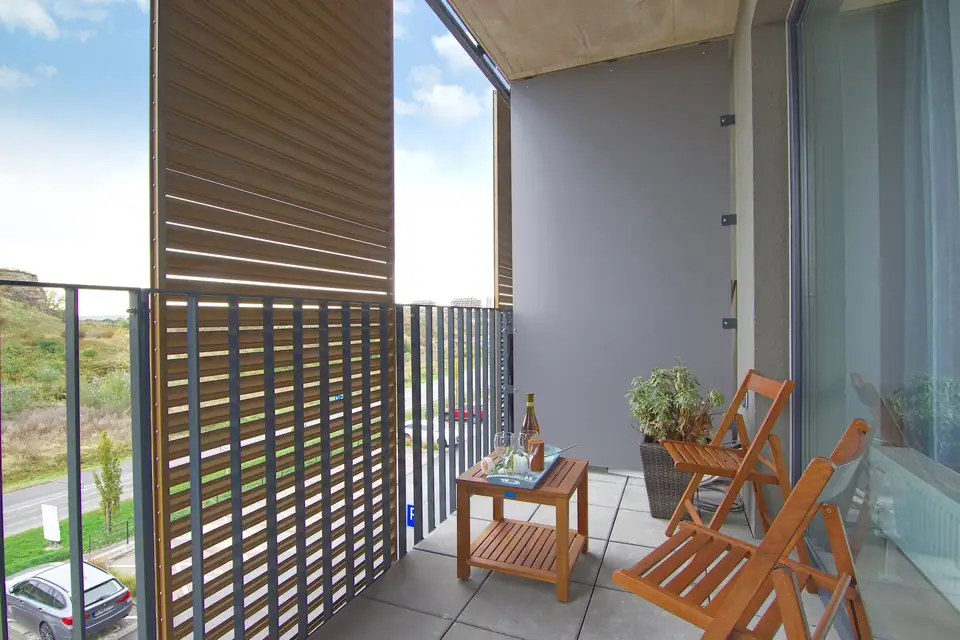
Tie at every grommet, not every other one. A screen held at only a few points flaps, wears through its edges and loads the ties unevenly. If the included ties are too short for your posts, buy longer UV-resistant ties rather than knotting short ones together.
Keep the screen on the inside face of the railing. Nothing should hang over the outer edge, where a loose corner could fall to the street or a balcony below.
Bamboo and reed rolls: warmer, but heavier in the wind
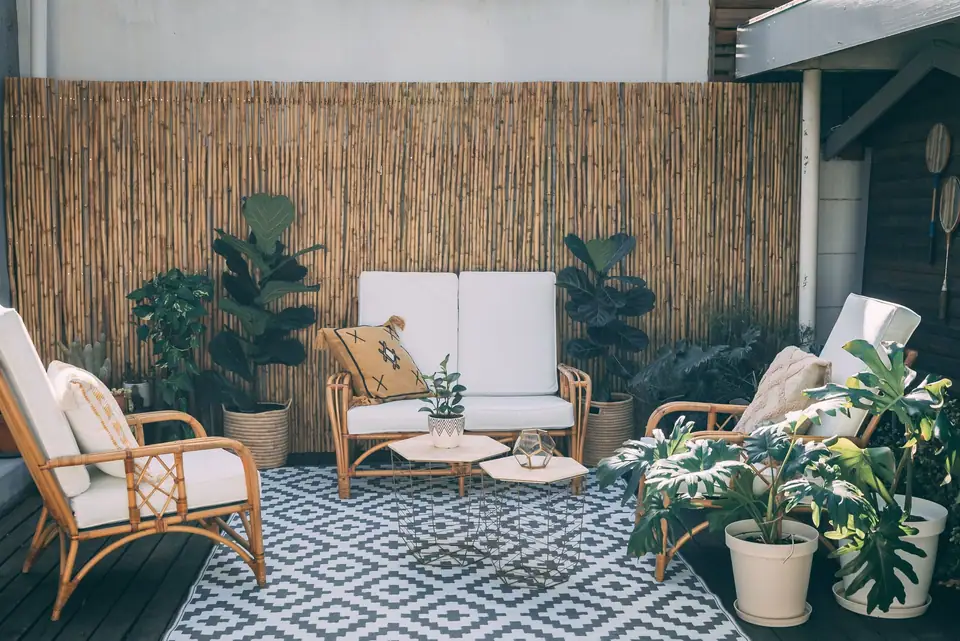
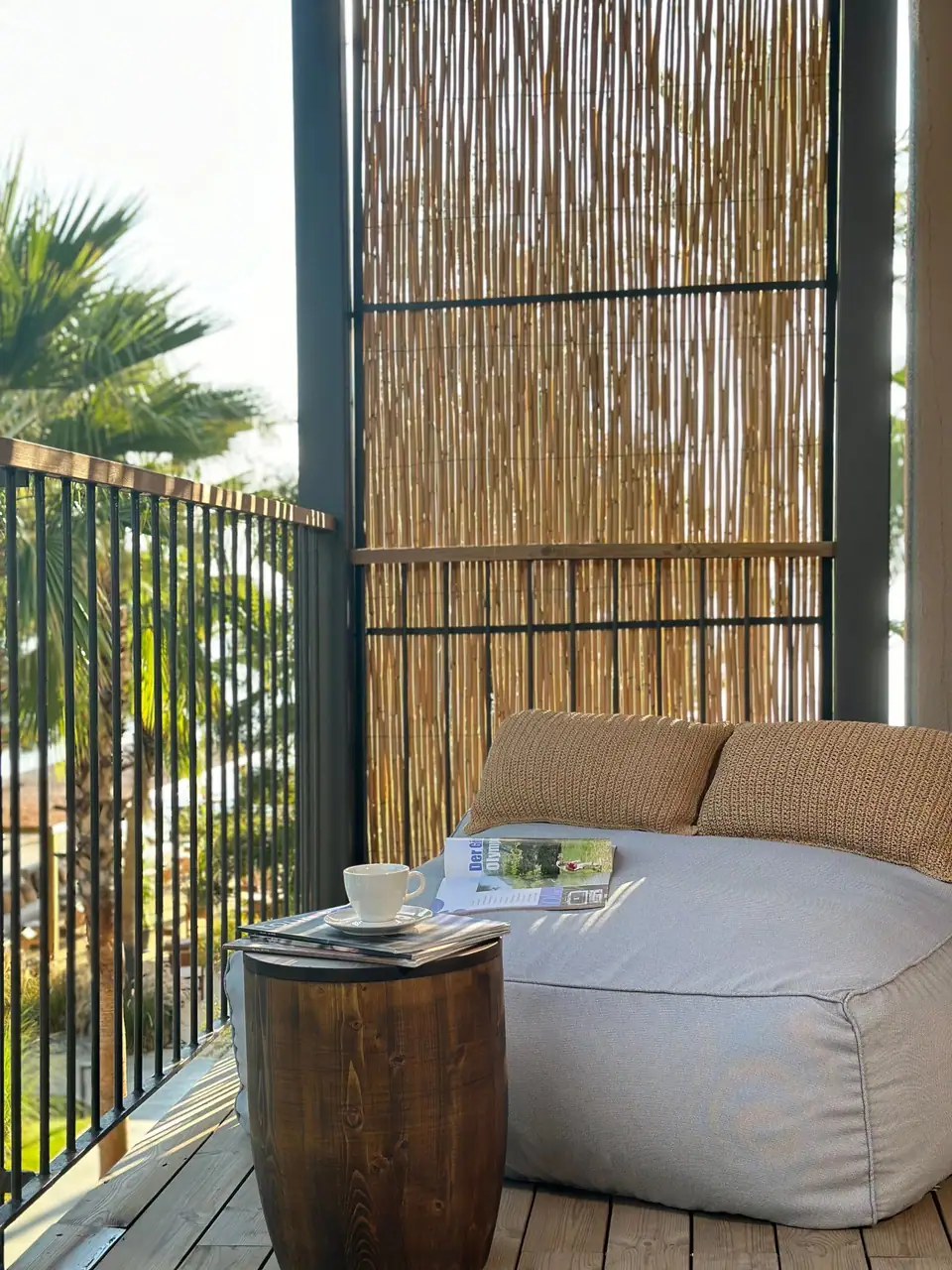
Rolls of bamboo canes or reed stems tie to the railing the same way as fabric. They look natural and warmer than a plain fabric screen. They also act more like a solid wall in wind than open-weave fabric does, so tie them tightly and often.
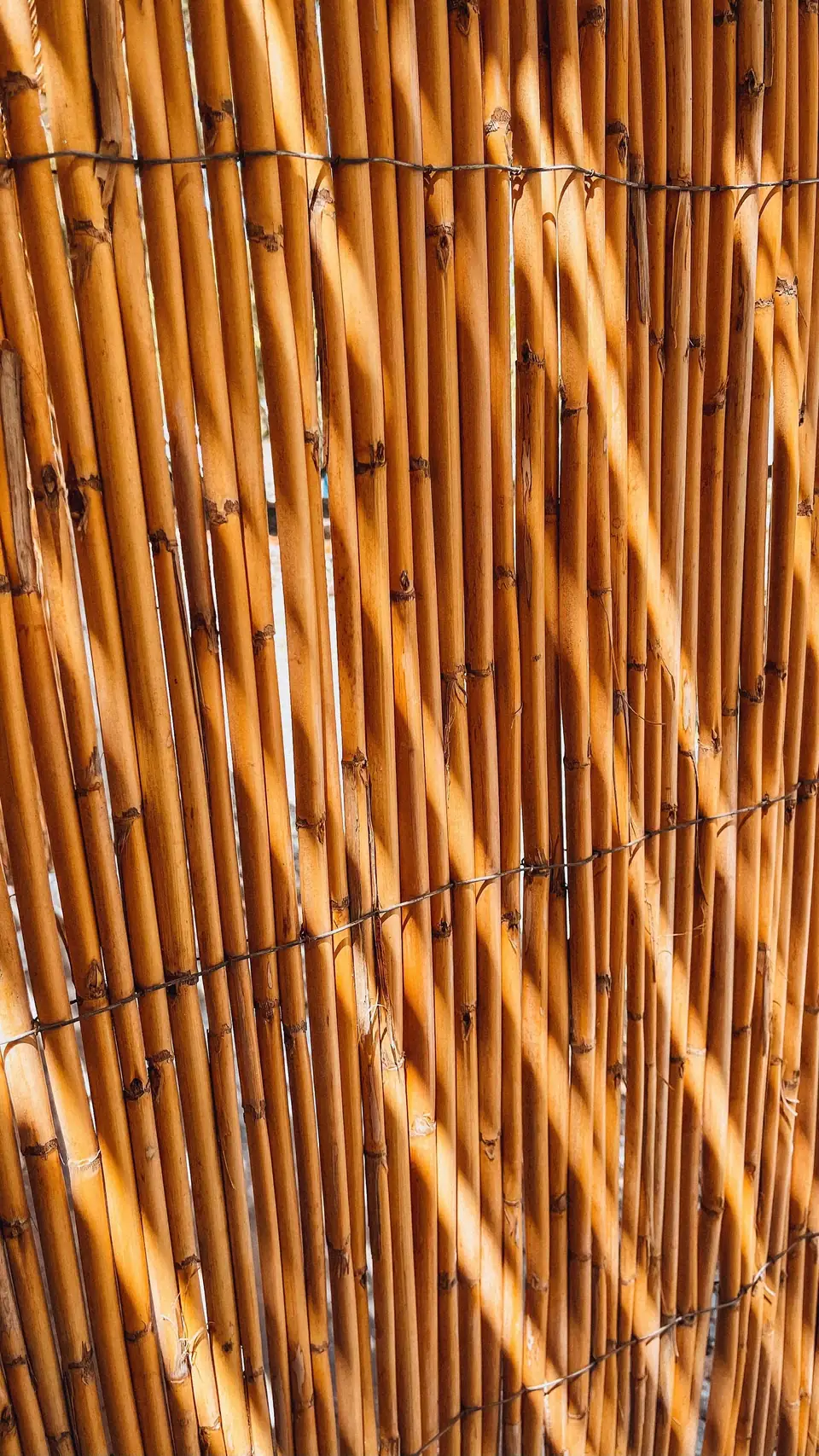
Natural canes weather outdoors. Follow the maker’s care notes on sealers and cleaning.
Freestanding screens: nothing touches the railing
If your lease bans anything fixed to the railing, a freestanding screen is the way around it. Folding panel screens stand on their own feet and move where you need them: in front of a neighbor’s window in the morning, beside your chair in the evening. Planter screens, a box with a trellis or slatted panel rising from it, stand on the floor and can hold real or faux plants.
Wind is the catch. A tall, solid screen on a high balcony acts like a sail. Choose one with a wide or weighted base, place it against a wall or in a sheltered corner, and fold it away before storms. If the maker gives a wind warning, follow it.
Measuring for a railing screen
- Height. Measure from the floor to the top of the railing; a screen taller than the rail sticks up above it and catches more wind.
- Run. Measure each side you want to cover, and add a little so the ends can wrap a post.
- Tie points. Count the posts and any mid-rails. More tie points mean less flapping.
- Drain and gaps. Leave the bottom edge clear of the floor drain so water can still run off.
Living or faux: green privacy
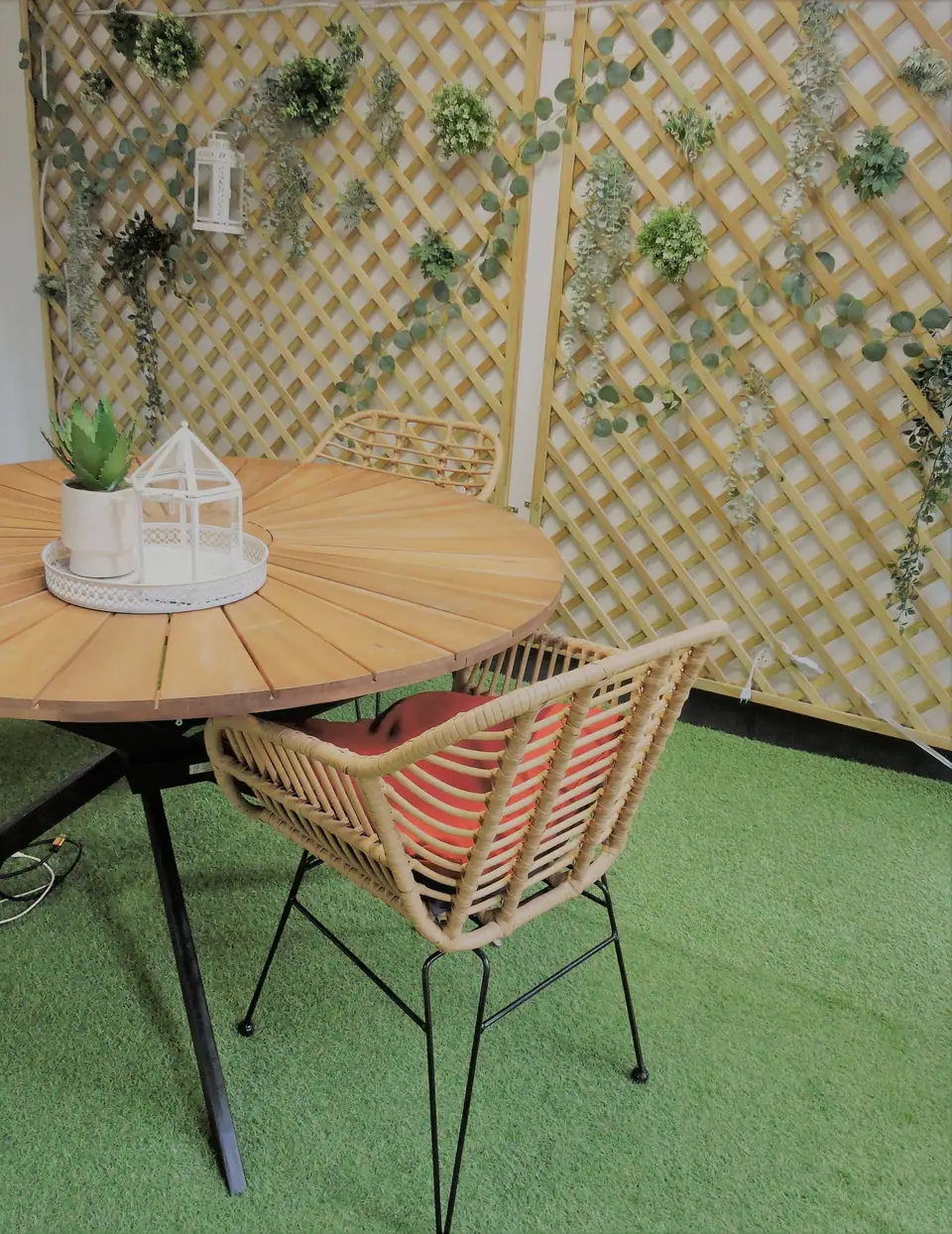
Faux hedge panels are plastic leaves on a grid that clip together and tie on like a screen. Makers sell many as UV-resistant: Nearly Natural, for example, says its outdoor range has “a built-in protectant to block and absorb harmful ultraviolet rays”, and adds that “no material is invincible.” Treat UV ratings as the maker’s claim, and expect fading in years of full sun. Our artificial plants guide covers what lasts outdoors.
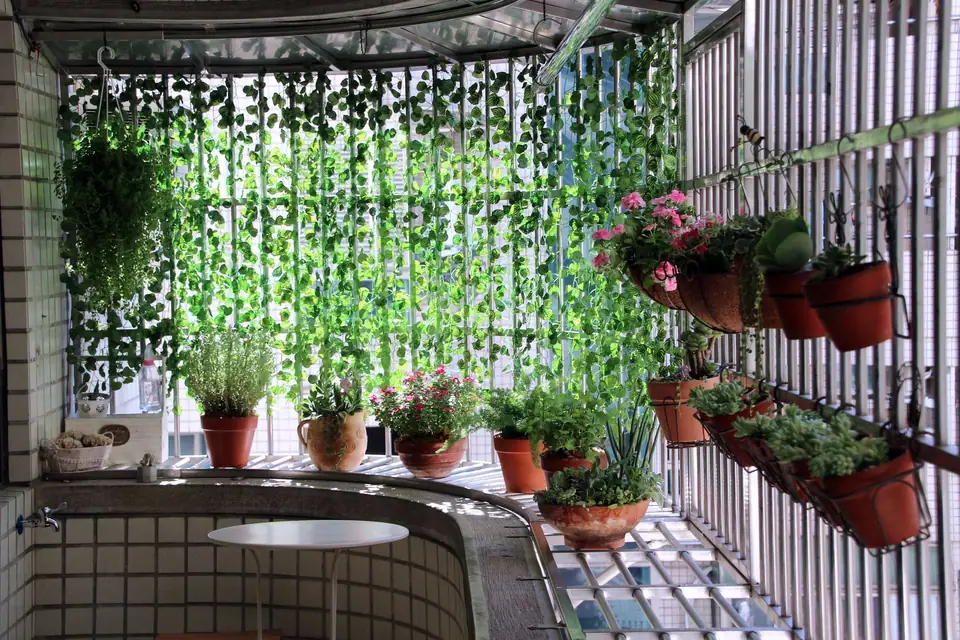
Living screens take more care but grow with you: tall containers of climbers on a trellis, or vertical planters along the wall. Check how much weight your balcony can take first, because a row of tall, wet containers is heavy. In wildfire areas, Fire Safe Marin, a Marin County, California fire-prevention group, calls bamboo plants “very flammable” and favors fire-resistant materials for screens, and Ashland Fire & Rescue in Oregon advises against bamboo for privacy screening.
Faux hedge panels and artificial greenery
Live listings, shown by eBay
Opens eBay in a new tab. Check condition, seller feedback and returns.
Rules, fire and neighbors
- Lease and HOA rules. Rules may cover what can be fixed to railings and how balconies look from outside. They vary, so read yours and ask.
- Fire rules. Bamboo, reed and plastic all burn. Ask your building manager or local fire department whether any material is restricted where you live.
- Neighbors. A screen on a shared divider affects the unit next door; agree on it first.
Want the rest of the space sorted too? See small balcony furniture and balcony flooring.
Frequently asked questions
Are balcony privacy screens allowed?
It depends on your lease, HOA rules and building. Rules may cover what can be fixed to a railing or how it looks from outside, and they vary by building, so read yours and ask your building manager before you buy.
What can I use to make my balcony more private?
A fabric screen tied to the railing, a bamboo or reed roll, faux hedge panels, a freestanding folding screen or tall planters with climbing plants. Pick by how much wind your balcony gets and whether you can fix anything to the railing.
How do I attach a privacy screen without drilling?
Most railing screens come with grommets or edges you can tie to the rail with UV-resistant zip ties or cord. A freestanding screen in a weighted base needs no fixing at all. Tie to the inside face of the railing so nothing hangs over the edge.
Do balcony privacy screens block wind?
Solid panels block more wind than open-weave fabric, which also means they catch more of it. Coolaroo describes its screening fabric as letting breezes through while blocking the view. On a windy balcony, a breathable screen with ties at every grommet is the safer choice.
Is a portable privacy screen worth it?
A freestanding folding screen suits renters who cannot fix anything to the railing and want to move it around. It needs a heavy enough base or a sheltered spot so wind cannot tip it.
Sources
- Privacy & Screening FabricsCoolaroo
- Sun-Resistant Artificial Plants for Lasting Outdoor BeautyNearly Natural
- How to Plan Privacy ScreensFire Safe Marin
- Fire-Resistant Vegetation as Privacy ScreensCity of Ashland Fire & Rescue
Filed under Small Balcony Setup: Ideas Renters Can Undo, Garden or Not.