How Much Weight Can a Balcony Hold? What to Check First
No website can tell you what your balcony holds. What design loads mean, who can answer for your balcony, and how to add up pots, soil and water.
We earn from qualifying purchases through links on this page. How we make money.

No website can tell you how much weight your balcony can hold, and neither can a building code table. Codes set design loads for new construction; what your balcony carries today depends on how it was designed and on its condition now. Ask your building manager, landlord or HOA first, and a licensed structural engineer before adding anything heavy.
This page explains what the code numbers mean, who can answer for your balcony, and how to add up what you plan to put on it. It belongs to our set up the space section.
What “design load” means, and why it is not your answer
Building codes split loads into dead load (the structure itself) and live load (people and the things that come and go, such as furniture). A design live load is a figure the engineer must plan for, in pounds per square foot (psf). It is a minimum for designers, not a rating stamped on the finished balcony.
The two model codes most US places adopt set these minimums:
| Code | Row | What the code table says |
|---|---|---|
| 2021 International Residential Code, Table R301.5 | Balconies (exterior) and decks | 40 psf |
| 2021 International Building Code, Table 1607.1 | Balconies and decks | 1.5 times the live load for the area served, not required to exceed 100 psf |
Which code applies depends on the type of building, and states and cities amend the tables when they adopt them. Washington State, for example, had a 60 psf balcony and deck figure in its residential code until a 2016 rule replaced it with 40 psf, and its published version of the building code table carried the same 1.5 times rule. Check with your city or county building department for the code that applied when your building went up.
None of these numbers says what an existing balcony holds. Hidden damage and past repairs matter as much as the original design, and only someone who inspects the balcony can judge them.
Railings are a separate question
A railing is a guard, and codes give guards their own requirements. The residential code table lists a 200-pound concentrated load for guards, and Anchorage’s deck handout puts it plainly: the top rail must resist 200 pounds placed anywhere on it, in any direction. That is a design test for new work, not an allowance for planter boxes hung on an old rail.
Keep heavy containers off the railing. Use railing planters only within the maker’s stated bracket limit, hung on the inside face, never over the outer edge.
Who can tell you what your balcony holds
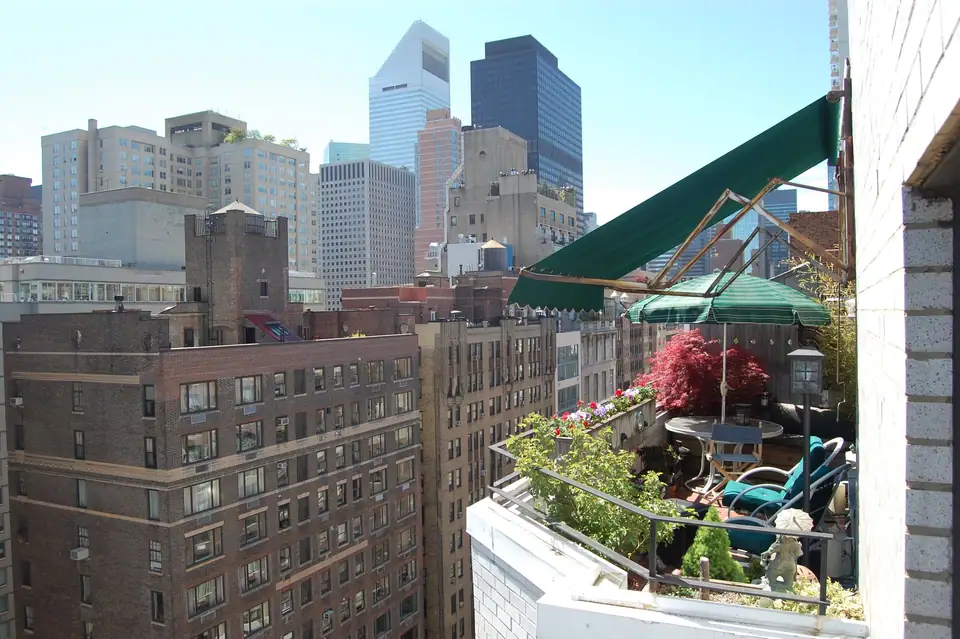
- Your building manager, landlord or HOA. They may have the plans, an engineer’s report or a written rule on balcony loads. Leases and HOA rules may also limit what goes on a balcony; rules vary, so read yours and ask.
- A licensed structural engineer. For anything you would struggle to lift, such as a hot tub or a row of large planters, an engineer can inspect the balcony and give a written answer.
- Your local building department. It can tell you which code edition applies and whether a project needs a permit.
The same questions come up for plug-in solar panels on a railing; our sister site explains balcony solar rules by state.
How to add up what you are adding
You cannot judge a balcony’s capacity, but you can know what you are putting on it. Add these for each container:
- The empty container. Check the maker’s listed weight. Ceramic and concrete pots weigh far more than plastic ones.
- The potting mix. The bag label gives its volume and often its weight. Moist mix weighs more than a dry bag.
- The water. Water weighs about 8.3 pounds per gallon: the University of Georgia Extension gives 8.32 pounds at 77°F, and NIST Handbook 44 gives about 8 1/3 pounds. A full 2-gallon watering can adds about 2 × 8.3 = 16.6 pounds.
- The plant, and anything else nearby. Count furniture and people as well.
Write the total down for the whole setup, then take it to the person who can answer.
Report these right away
Lighter choices that help
- Choose light containers, such as plastic or fabric, over stone and glazed ceramic. Our grow bags vs pots guide compares them.
- Spread pots out instead of grouping heavy ones in one corner, and keep the heaviest near the building wall rather than at the railing.
- Use saucers and trays so water does not pool or run onto the unit below.
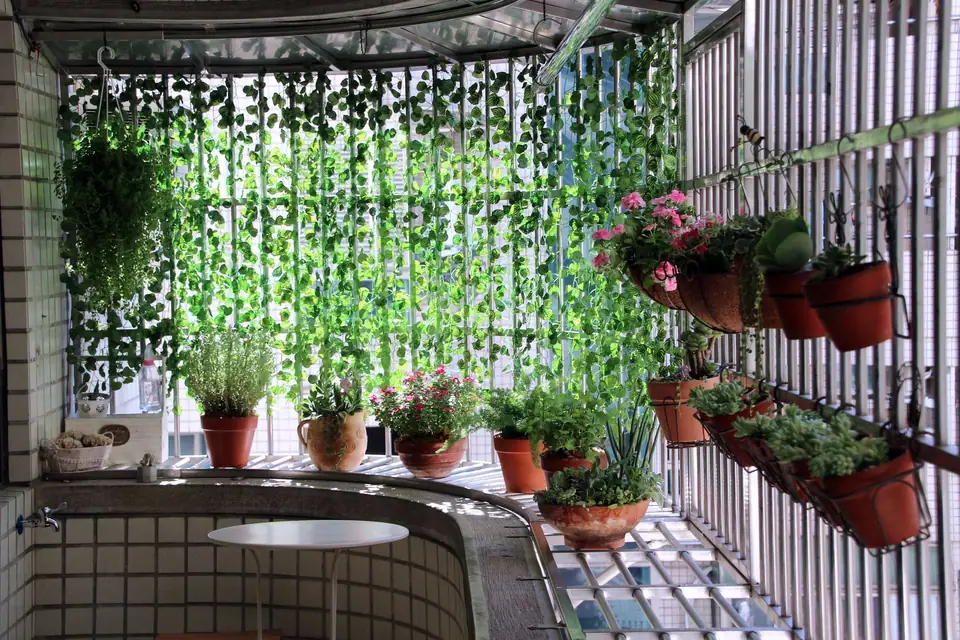
- Swap a big planter for vertical planters or artificial plants where weight is a worry.
Lightweight planters: fiberglass, resin and plastic
Live listings, shown by eBay
Opens eBay in a new tab. Check condition, seller feedback and returns.
Children and balcony edges
Safe Kids Worldwide advises not letting children play on high decks or balconies without an adult supervising, and moving furniture away from windows so climbers cannot reach them. Apply the same thinking to the railing: keep chairs and planters where a child cannot use them as a step. Our small balcony furniture guide covers layouts that keep the edge clear.
Frequently asked questions
How much weight can a balcony hold?
It depends on how that balcony was designed and built, which code edition applied, and its condition today. No general figure answers it for your balcony. Ask your building manager, landlord or HOA, and a licensed structural engineer before adding anything heavy.
Is the 40 or 60 psf figure what my balcony can hold?
No. Those are design loads that codes ask designers to plan for in new construction, and they vary by code edition and by state or city. They do not describe what an existing balcony can safely carry after years of weather and wear.
How heavy is a watered planter?
Add the planter, the potting mix from the bag label and the water. Water alone weighs about 8.3 pounds a gallon, according to the University of Georgia Extension and NIST, so wet mix weighs noticeably more than the bag did on the store shelf.
Can I hang heavy planters on my balcony railing?
Keep heavy items off the railing. Railings are designed as guards, and the code requirement for them is not an allowance for planters. Use brackets only within the maker's stated load limit, on the inside of the rail, and ask your building manager first.
Who do I ask about my balcony's weight limit?
Start with your building manager, landlord or HOA, who may have the original plans or an engineer's report. For a hot tub, large planters or anything similar, a licensed structural engineer is the person who can assess the balcony itself.
Sources
- 2021 International Residential Code, Chapter 3: Building Planning (Table R301.5)International Code Council
- 2021 International Building Code, Chapter 16: Structural Design (Table 1607.1)International Code Council
- WSR 16-13-123: Building Code Council emergency rule (Table R301.5)Washington State Building Code Council
- WAC 51-50-1607: Section 1607, Live loads (effective until July 1, 2020)Washington State Legislature
- Handout R.13: Residential deck plan requirementsMunicipality of Anchorage, Development Services
- Weekly Water Fun Fact: Weight of WaterUniversity of Georgia Cooperative Extension
- NIST Handbook 44 (2026), Appendix B: Units and Systems of MeasurementNational Institute of Standards and Technology
- Falls Prevention TipsSafe Kids Worldwide
Filed under Small Balcony Setup: Ideas Renters Can Undo, Garden or Not.