Grow Bags vs Pots on a Balcony: Sizes, Weight and Drainage
Fabric grow bags and plastic pots compared for a balcony: drying, roots, frost and weight, minimum sizes by crop, and how to keep runoff off the floor.
We earn from qualifying purchases through links on this page. How we make money.
Fabric grow bags suit a balcony that you water daily: they are light, fold away and air-prune roots, but they dry out faster than plastic and drain from every side. Plastic pots hold moisture longer. Choose the size by crop, and set either one on a saucer or tray so water stays off the floor and the unit below.
Grow bags are part of our balcony planters section. For containers that need less watering, see self-watering planters; to grow up instead of out, see vertical planters.
Grow bags vs plastic pots
| Feature | Fabric grow bag | Plastic pot |
|---|---|---|
| Empty weight | Lightweight and portable (UMD) | Light; check the listed weight |
| Drying | Dries faster than plastic (UMD) | Nonporous, so the mix stays moist longer (UMD) |
| Roots | Air-pruned: roots stop at the fabric and branch (UMD) | Roots hit the solid wall and continue as a single root (UMD) |
| Frost | The maker says Smart Pots will not crack from frost | Proven Winners says cold winters can make plastic brittle |
| Storage | Folds once empty and dry (Smart Pots) | Stacks |
The air pruning is the bag’s main advantage. University of Maryland Extension explains that when roots reach open air at the edge of the bag, they stop growing in length and branch into a denser, fibrous root system. In a solid pot they hit the wall and continue as a single root.
The drawback is water. University of Maryland Extension says fabric containers dry faster than plastic, and Smart Pots notes that bags filled with lighter, less water-retentive mixes may need watering more often. On a hot, windy balcony, check grow bags every day.
When is a plastic pot the better choice?
A plastic pot wins when you cannot water every day. Its mix stays moist longer, and a self-watering plastic planter adds a reservoir on top of that. It also suits plants that stay put for years, such as a bay or rosemary you keep through the seasons, because it holds its shape and does not need folding away.
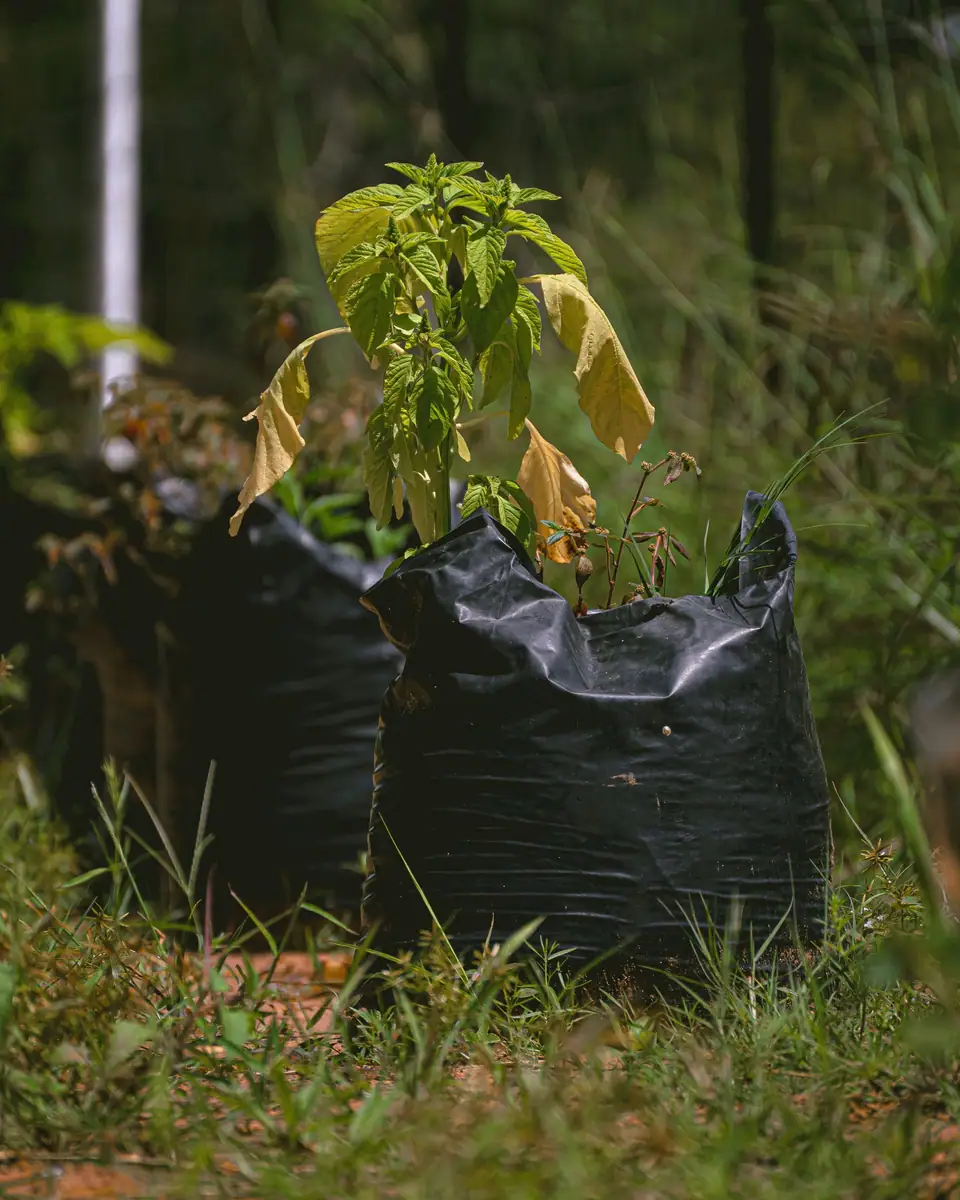
Color matters for both. University of Maryland Extension warns that dark containers can raise the temperature of the potting mix and injure tender roots. Many grow bags are black, like the ones in our photos, so on a sunny, reflective balcony consider a lighter bag or pot, or shade the side that faces the sun.
A grow bag wins when weight and storage matter more than watering. It is light to carry up stairs, folds flat in winter and costs little to replace.
What size grow bag do you need?
University of Maryland Extension gives these minimum container volumes. Bigger is easier to keep watered, but every extra gallon of wet mix adds weight.
| Crop | Minimum volume (UMD Extension) |
|---|---|
| Leaf lettuce | 1/2 gallon |
| Bush beans, carrots, Swiss chard | 2 gallons |
| Cherry tomato | 2 gallons |
| Small herbs such as basil, thyme and mint | 2 to 5 gallons |
| Standard tomato, peppers, eggplant, cucumbers | 5 gallons |
| Large herbs such as rosemary, sage and dill | 5 gallons or larger |
| Summer squash | 10 gallons |
For more on tomatoes, see growing tomatoes in pots.
Fabric grow bags by size
Live listings, shown by eBay
Opens eBay in a new tab. Check condition, seller feedback and returns.
Grow bags on a balcony floor: drainage and weight
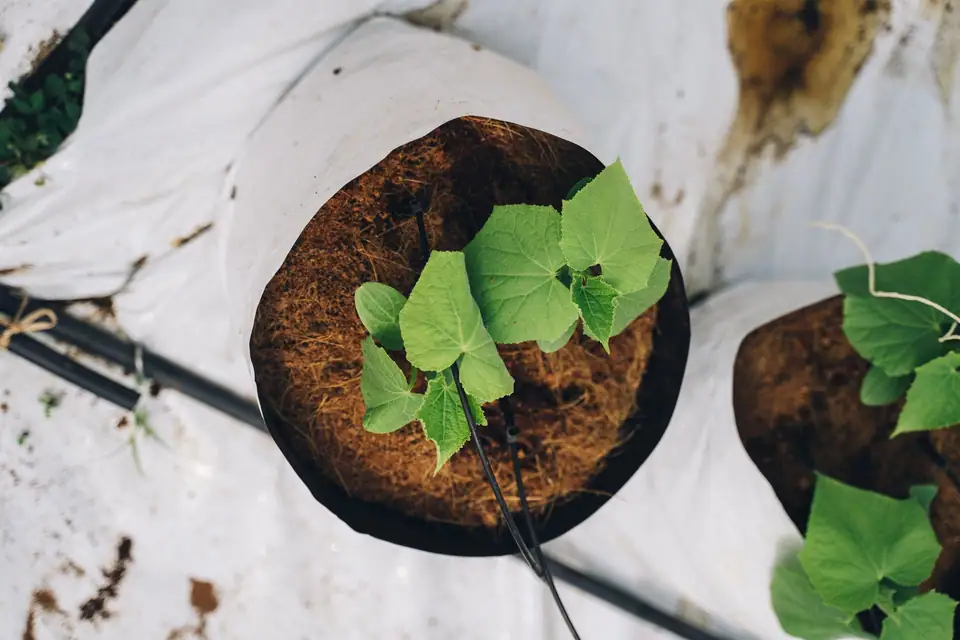
A grow bag drains through its sides as well as its base. University of Maryland Extension warns that drained water can stain concrete and wood decking, and that saucers help when you garden above a neighbor’s balcony. Empty them after watering, the same source says, so the water does not seep back in or breed mosquitoes.
Smart Pots suggests a saucer on a treated wood deck and says many users set bags on bricks or stones to lift them out of standing runoff. On a non-porous floor, the maker says, a slight slope keeps water from standing for long.
The bag weighs little, but the mix does not. University of Maryland Extension says a 20-inch container filled with moist potting mix and plants can weigh 100 pounds. Only building management, your landlord or HOA, or a licensed structural engineer can tell you what your balcony carries. See balcony weight limits before you line up several large bags.
Potatoes in grow bags
Potatoes are the classic grow bag crop, because you add mix as the plants grow and tip the bag out to harvest. University of New Hampshire Extension suggests:
- A container about 2 to 3 feet tall holding 10 to 15 gallons, with 5 gallons of soil per plant.
- A half-and-half mix of soilless potting mix and quality compost, not garden soil.
- At least 6 to 8 hours of direct sun a day.
- Adding mix as the plants grow, leaving about 6 inches of foliage exposed.
- Watering whenever the top 1 to 2 inches feel dry, keeping the mix moist but never soggy.
University of Maryland Extension shows three potato plants grown in one 5-gallon fabric bag, so plant spacing is a guideline.
How do you clean and reuse grow bags?
Smart Pots says to dump out the soil, let the bag dry, and brush off the dust and small roots after a few days. The empty bag then folds for storage. Some owners wash bags in OxyClean or peroxide, by machine or in a tub, but the maker says never to put them in a dryer. One customer, the maker reports, was still using the original bags 8 years later.
Frequently asked questions
Are grow bags better than pots?
They suit different needs. University of Maryland Extension says fabric bags are inexpensive, lightweight and reusable and air-prune roots, but dry out faster than plastic. A plastic pot holds moisture longer, which helps if you cannot water every day.
What size grow bag do I need for tomatoes?
University of Maryland Extension lists 5 gallons as the minimum for a standard tomato and 2 gallons for a cherry tomato. Bigger containers hold more water between waterings but weigh more when wet.
How many potatoes can I grow in a grow bag?
University of New Hampshire Extension suggests planning 5 gallons of soil for each plant, in a container of about 10 to 15 gallons. University of Maryland Extension shows three plants grown in one 5-gallon fabric bag, so treat these as guidelines rather than rules.
Do grow bags need a saucer on a balcony?
Yes. Water drains through the fabric on every side, and University of Maryland Extension notes that drained water can stain concrete and wood decking. Smart Pots suggests a saucer, or bricks or stones to lift the bag out of standing runoff.
Can you reuse grow bags?
Yes. Smart Pots says to empty the bag, let it dry for a few days and brush off the dust and small roots, and some owners wash them. The maker says not to put its bags in a dryer.
Sources
- Growing Vegetables in Containers and Salad TablesUniversity of Maryland Extension
- What is the best way to grow potatoes in containers?University of New Hampshire Extension
- Smart Pot FAQSmart Pots
- AquaPots Winter Care: How to Winterize and Store AquaPots Containers in Cold ClimatesProven Winners
Filed under Balcony Planters: Which Container Fits Each Spot.