Growing Tomatoes in Pots on a Balcony: Size, Variety, Support
Growing tomatoes in pots on a balcony: pot size, compact varieties, cages that hold in wind, daily watering, pollination and the bottom leaves.
We earn from qualifying purchases through links on this page. How we make money.
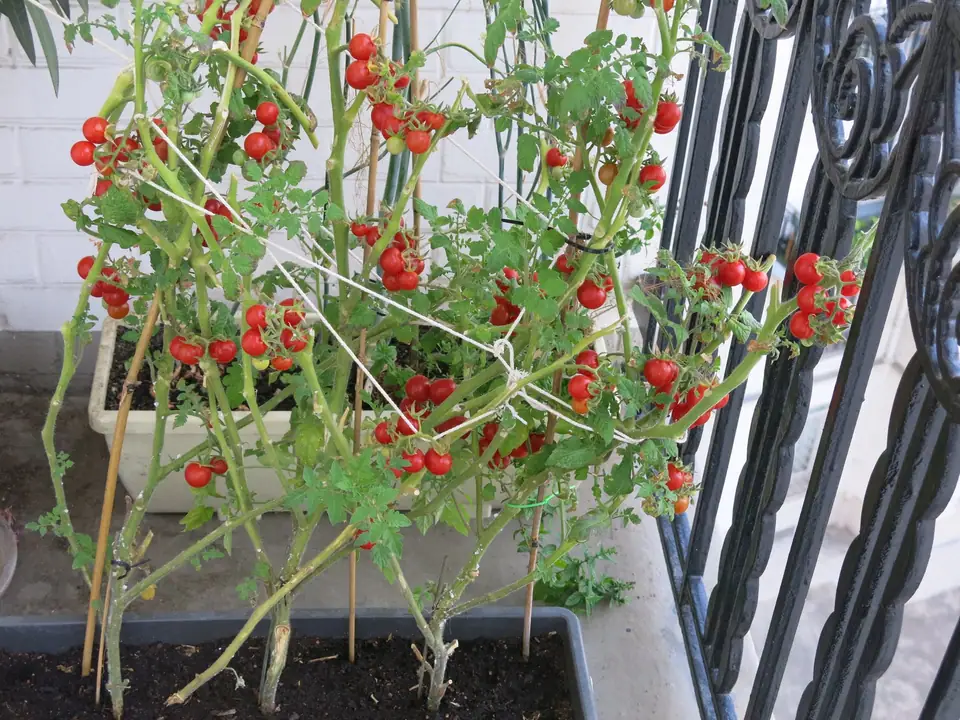
Yes, tomatoes grow well in pots on a sunny balcony. Choose a compact determinate or small-fruited type, give it at least a 5-gallon container (bigger needs less watering), find six to eight hours of direct sun, put a sturdy cage in at planting, and check the soil every day in summer.
This guide is part of what to grow on a balcony.
How much sun does a balcony tomato need?
Tomatoes are grown for their fruit. Oregon State University Extension says fruiting vegetables such as tomatoes, beans and peppers need six to eight hours of direct sun each day. Iowa State University Extension defines full sun as at least six hours.
Count the hours on your balcony in early summer. The balcony above often shades the back of yours, so the sunniest spot may be by the railing. With fewer than six hours, herbs and leafy greens are a better use of the space: see growing herbs in pots.
What size pot does a tomato need?
Texas A&M AgriLife puts it plainly: a 5-gallon container may work for a tomato, but a 15-gallon container means less watering and a more productive plant. Oregon State also names five gallons as the size for deep-rooted crops such as tomatoes, peppers and eggplant.
On a balcony the bigger pot has a cost. Wet potting mix is heavy, so place large pots against the wall rather than along the rail, and read how much weight a balcony can hold before you fill several.
- Drainage. AgriLife says to drill a few holes if a container has none. Stand the pot in a saucer so runoff does not drip onto the balcony below.
- Heat. New Mexico State University Extension suggests light-colored pots, or shading the pot, to keep the soil cooler. If a plant dries out completely by evening, its container is too small.
Tomato planters and cages
Live listings, shown by eBay
Opens eBay in a new tab. Check condition, seller feedback and returns.
Which tomatoes suit a pot?
South Dakota State University Extension describes two growth habits.
| Type | How it grows (SDSU Extension) | Support | Where it fits on a balcony |
|---|---|---|---|
| Determinate (bush) | Stops growing once fruit sets; shorter; some are sold as “patio” types | Usually little; a cage helps in wind | A 5-gallon pot on a small balcony |
| Indeterminate (vining) | Keeps growing and fruiting until frost | Needs a stake or cage | A large pot against a sunny wall |
SDSU notes that determinate plants work well in containers. Small-fruited types such as cherry tomatoes are also the ones Colorado State University Extension recommends for hanging planters (more on those below).
Support and wind on a balcony
SDSU says a cage must be large and sturdy enough to hold a heavy plant laden with fruit, and that staking or caging reduces rot and leaf blights. Mississippi State University Extension mentions wire cages at least 18 inches across as a popular choice.
Set the cage at planting time, before roots fill the pot. Illinois Extension says square pots are the most stable and suggests a base broader than the pot is tall for windy spots like balconies. The Royal Horticultural Society suggests tying taller plants to railings on exposed sites. Keep the plant and its ties on the inside of the rail.
A fabric grow bag holds the same volume of mix as a pot of the same size and weighs less empty. The trade-offs are in grow bags vs pots.
Grow bags for tomatoes
Live listings, shown by eBay
Opens eBay in a new tab. Check condition, seller feedback and returns.
How often to water a potted tomato
Oregon State says daily watering is not unusual for containers. Water when the soil feels dry and continue until water runs from the drainage holes, but do not let the soil stay soggy. On a balcony, slow down as the first drips appear so the saucer can catch them. Watering a balcony garden covers saucers, drip kits and trips away.
Uneven watering shows up on the fruit. NMSU explains blossom-end rot as a calcium shortage at the blossom end of young fruit. Calcium travels in water, so a plant that wilts cannot move enough of it. NMSU’s fixes are a larger container and morning sun with afternoon shade.
Do you need to hand pollinate balcony tomatoes?
Usually not. University of Maryland Extension says tomatoes pollinate themselves about 96% of the time, but the pollen has to be jostled loose by wind or insects. The problem it describes is in enclosed high tunnels, where there is little wind. An open balcony gets breeze.
Dropped flowers more often point to heat. Extension horticulturists writing for UT Extension say tomato pollen becomes nonviable when nights fall below 55°F or rise above 75°F, or days pass 85°F.
Feeding and the bottom leaves
AgriLife suggests a slow-release fertilizer that will not burn roots, with a soluble liquid feed for a quick boost. Use any fertilizer or pest product at the rate its label gives. For pesticides, the US EPA points out that using a product in a way its label does not allow is a violation of federal law.
Colorado State says removing the leaves in the lower 8 to 12 inches as the plant grows helps protect them from infections splashing up from the soil. Mulch and morning watering at the base help too.
Hanging and upside-down tomato planters
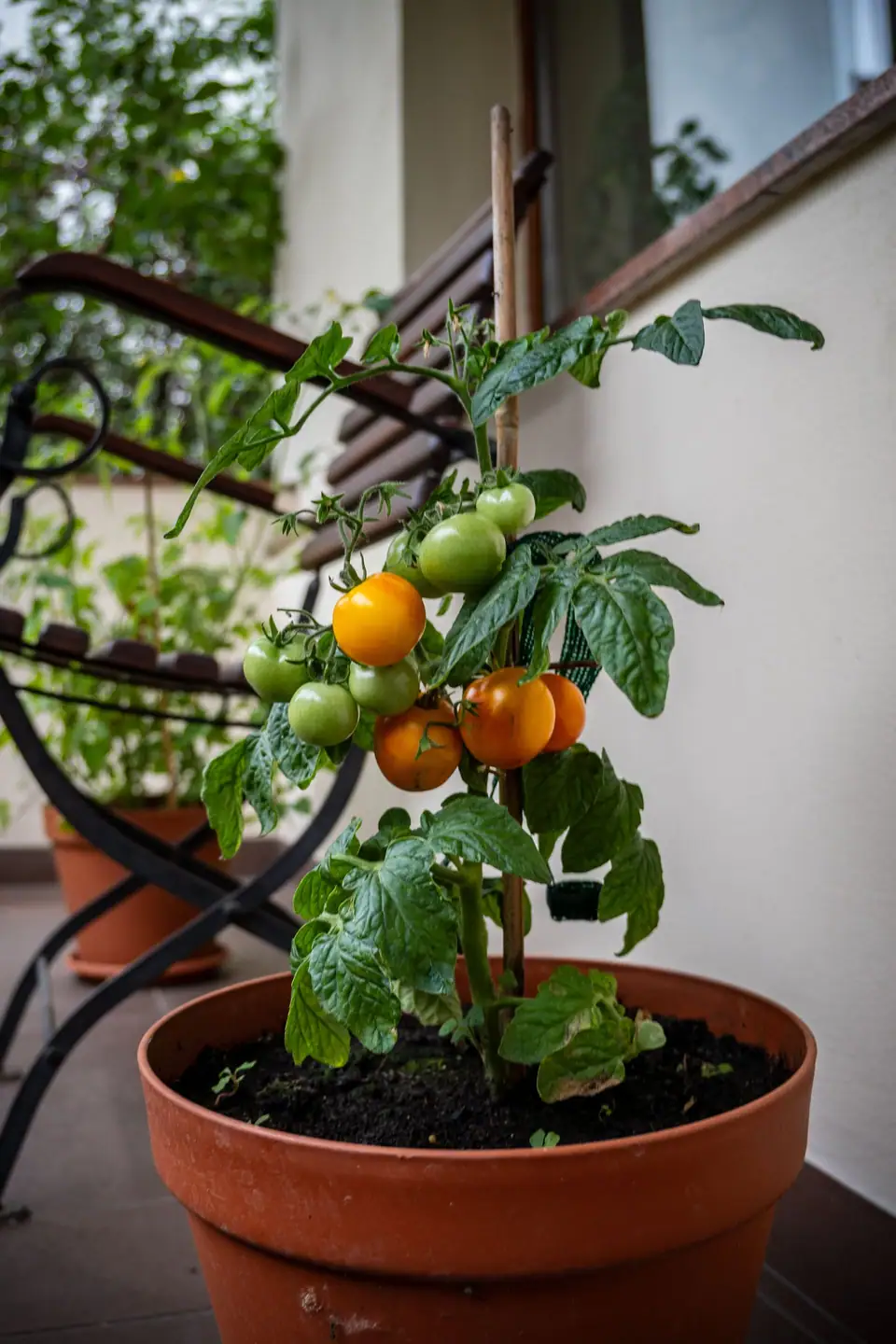
Colorado State’s PlantTalk is frank about upside-down planters. The stems turn upward, wind can break them, and a planter full of damp soil and a large plant can weigh 50 pounds. A balcony overhead also shades it, and thin plastic planters dried out even with daily watering. Its advice: grow tomatoes right side up if you can, and choose small-fruited types if you cannot.
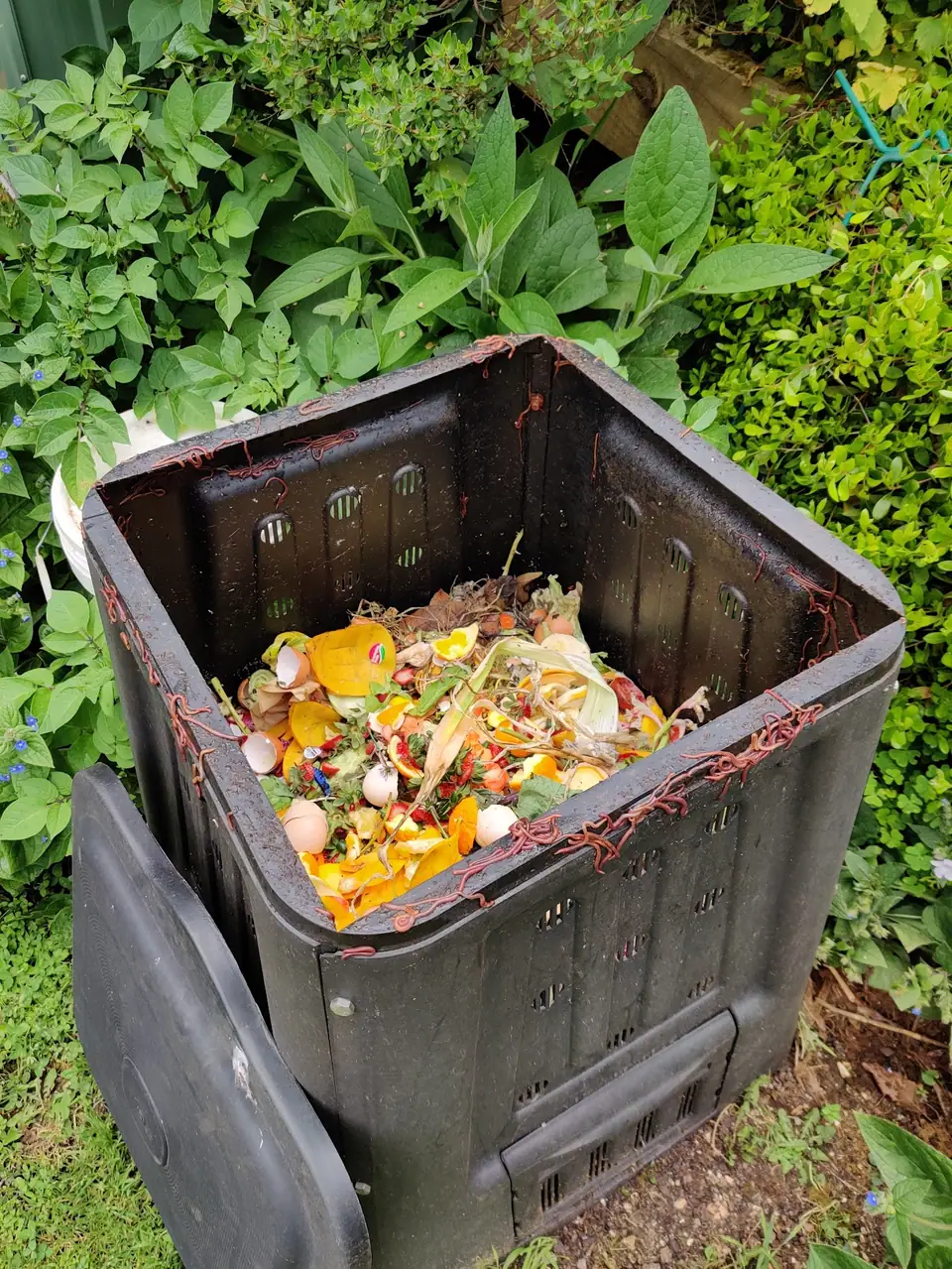
Next, see composting on a balcony for your kitchen scraps. Cages and grow bags also make easy presents: see gifts for balcony gardeners.
Frequently asked questions
Do tomatoes do well in pots?
Yes, if the pot is big enough and the spot is sunny. Texas A&M AgriLife says a 5-gallon container can work, while a 15-gallon one needs less watering and gives a more productive plant. Oregon State Extension puts the sun need at six to eight hours of direct sun a day.
Should you take the bottom leaves off a tomato plant?
Colorado State University Extension says removing the leaves in the lower 8 to 12 inches as the plant grows helps protect them from infections that splash up from the soil. It also suggests mulch and watering at the base of the plant in the morning.
Do I need to hand pollinate tomatoes on a balcony?
Usually not. Tomato flowers pollinate themselves once wind or insects shake the pollen loose, according to University of Maryland Extension. Pollination problems show up mainly in still, enclosed spaces such as high tunnels.
Why are the flowers falling off my potted tomato?
Heat is a common cause. Extension horticulturists writing for UT Extension say tomato pollen stops working when nights fall below 55°F or rise above 75°F, or days pass 85°F. Steady watering also matters, because a dry pot stresses the plant.
What kind of cage does a potted tomato need?
One that is tall and strong enough for a plant full of fruit, as South Dakota State Extension puts it. Put it in at planting time, and on a windy balcony choose a wide, low pot so the whole thing cannot tip. A heavy-duty tomato cage suits indeterminate types.
Sources
- No yard? Grow vegetables in containersOregon State University Extension Service
- Consider a container vegetable garden this fallTexas A&M AgriLife Today
- Growing Edible Plants in Shady AreasIowa State University Extension and Outreach
- Tomato: How to Grow ItSouth Dakota State University Extension
- TomatoesMississippi State University Extension Service
- Container SizeIllinois Extension
- Greening balconies and roof gardensRoyal Horticultural Society
- Blossom End Rot in Container Grown TomatoesNew Mexico State University Extension
- Problems with Pollination in High Tunnel TomatoesUniversity of Maryland Extension
- UTK Question of the Week: What causes blossom drop in tomatoes?University of Tennessee Extension (Tennessee Local Food)
- Tomato Early BlightColorado State University Extension
- Upside Down Tomatoes: Do They Work?Colorado State University Extension (PlantTalk Colorado)
- Introduction to Pesticide LabelsUS Environmental Protection Agency
Filed under What to Grow on a Balcony: Plants by Sun, Shade and Wind.