What to Grow on a Balcony: Plants by Sun, Shade and Wind
What to grow on a balcony, sorted by hours of direct sun, then heat and wind: vegetables, herbs and greens for each spot, and when faux plants make more sense.
We earn from qualifying purchases through links on this page. How we make money.
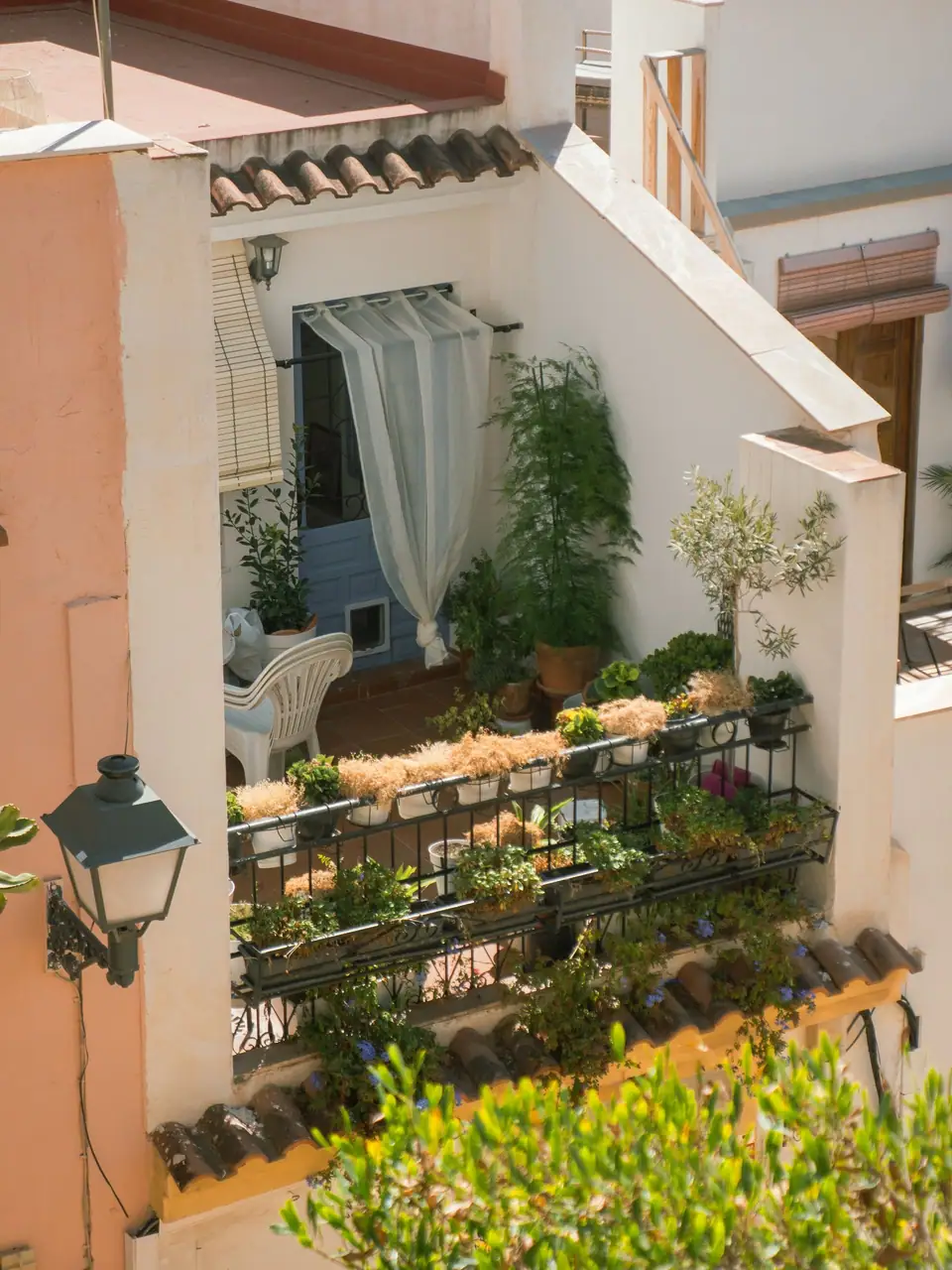
What grows on a balcony depends first on hours of direct sun. Six or more hours suits tomatoes, peppers and beans. Four to six suits leafy greens, peas and most kitchen herbs. Two to four still grows spinach, mustard greens and mint. Then plan for heat and wind, which dry pots fast and knock over tall plants.
Most balcony gardens grow in containers, so this section of the site covers the plants and their care. For pots and planters themselves, see balcony planters.
How many hours of sun does your balcony get?
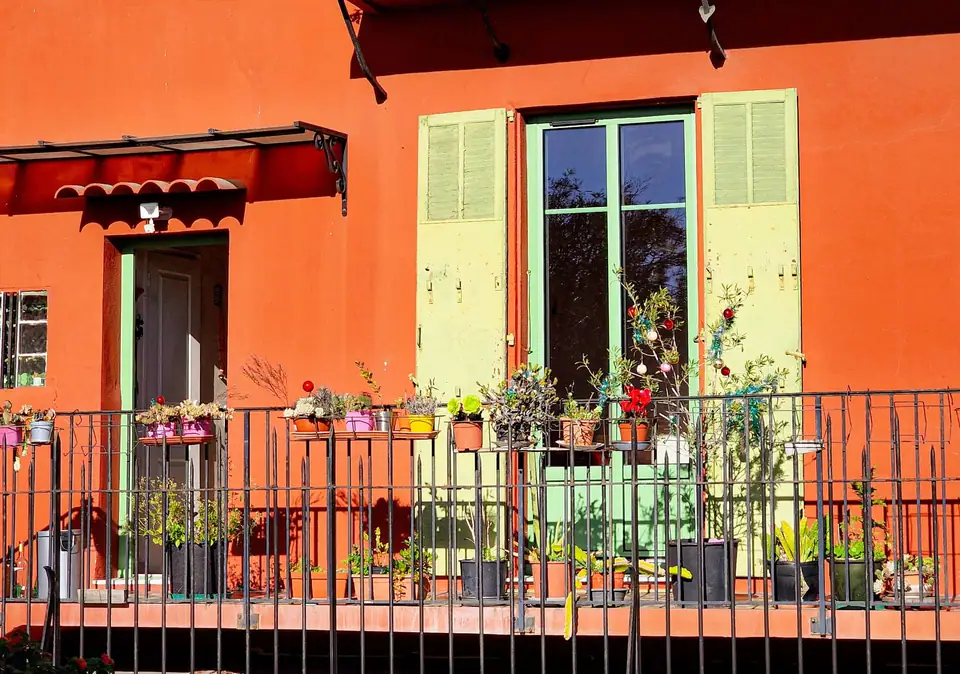
Count hours of direct sun, not daylight. Check the balcony every hour or two on a clear day in early summer and note when the sun reaches the floor where your pots will sit.
Iowa State University Extension defines full sun as at least six hours of direct sunlight, light shade as four to six, moderate shade as two to four and heavy shade as under two. A balcony above yours, a wall to one side or the next building can cut those hours sharply, often for only part of the floor.
The direction your balcony faces gives a first guess, but measure it: a south-facing balcony under a deep overhang can get less sun than an open east-facing one. Repeat the count in late summer if you can, because the sun sits lower and reaches further under overhangs as the season turns.
What grows with your hours of sun
The table follows Iowa State Extension’s shade guide and Oregon State University Extension’s container advice. Use it to pick a group, then read the guide for that plant.
| Direct sun a day | Vegetables and fruit | Herbs | Notes |
|---|---|---|---|
| 6 to 8 hours or more | Tomatoes, peppers, beans (Oregon State) | Rosemary (Illinois Extension) | The only spot for fruiting crops; see tomatoes in pots |
| 4 to 6 hours (light shade) | Lettuce, spinach, kale, Swiss chard, arugula, peas, radish, beets, strawberries | Basil, chives, cilantro, mint, parsley, sage, tarragon | Iowa State and Illinois suggest 4 to 6 hours for herbs; see herbs in pots |
| 2 to 4 hours (moderate shade) | Bok choi, mustard greens, spinach | Mint | Expect smaller harvests |
| Under 2 hours (heavy shade) | None productive (Iowa State) | None productive | Shade-tolerant ornamentals or faux plants |
Iowa State puts it plainly: no vegetable, fruit or herb will be productive in full shade. Its advice for a shady yard applies to a balcony too: grow edibles in a container and put the container where the sun is.
Hot balconies: heat, shade and dark pots
Heat is the other half of the sun story. Afternoon sun on a concrete floor and walls can heat pots and the roots inside them.
New Mexico State University Extension suggests light-colored pots, or shading the pots, to keep roots cooler and slow drying, and a spot with morning sun and afternoon shade for container tomatoes. Heat also stops fruit: extension horticulturists writing for UT Extension say tomato pollen becomes nonviable when days pass 85°F or nights stay above 75°F.
Shade cloth over the hottest hours, or a clamp umbrella fixed to the inside of the rail, takes the edge off. Close umbrellas in wind as the maker instructs. Hot balconies also need more water; watering a balcony garden covers how often.
Shade cloth and clamp umbrellas for a hot balcony
Live listings, shown by eBay
Opens eBay in a new tab. Check condition, seller feedback and returns.
Windy balconies: what to check
Wind dries pots, snaps stems and can tip a tall planter, and an open balcony has little shelter from it.
- Low and wide pots. Illinois Extension says square pots are the most stable and suggests a base broader than the pot is tall for balconies.
- Filter the wind, do not block it. The Royal Horticultural Society suggests slatted or mesh screens to cut turbulence; see balcony privacy screens.
- Tie in tall plants on the inside of the railing, as the RHS suggests for exposed sites.
- Choose tough plants. The RHS points to drought- and wind-tolerant plants, often with narrow, gray or waxy leaves.
- Keep weight off the rail. Heavy pots go by the wall: read balcony weight limits.
Perennials and winter: check your hardiness zone
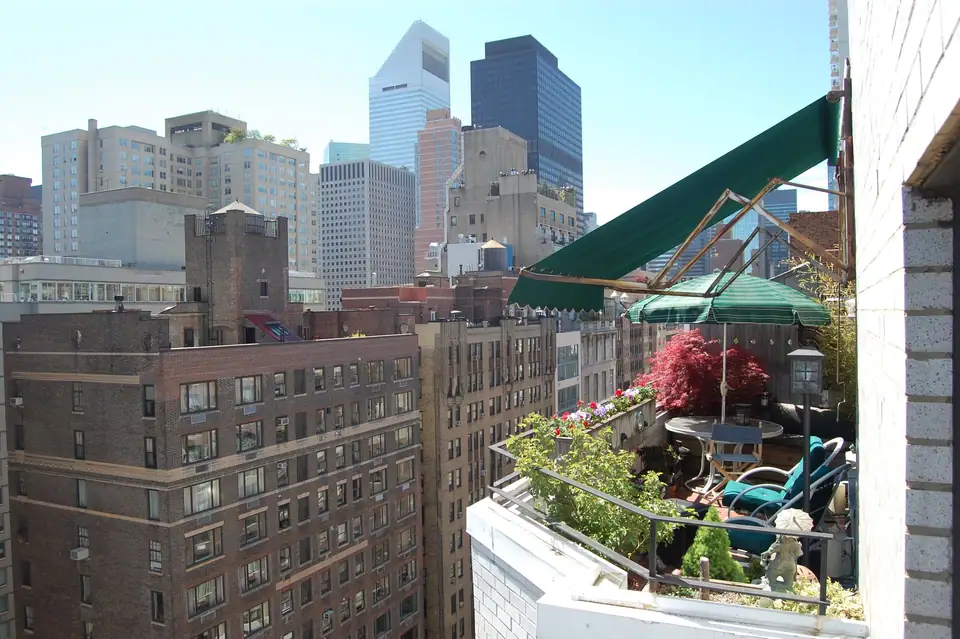
Annual crops such as tomatoes and basil are planted fresh each spring. For anything you want to keep from year to year, check your zone on the USDA Plant Hardiness Zone Map. The 2023 map is based on the average annual extreme minimum winter temperature, shown in 10°F zones and 5°F half zones, and you can look up your zone by ZIP code.
Illinois Extension notes that larger, thicker or insulated pots protect overwintering roots better. Rosemary is one example: Illinois says it is not reliably hardy in zone 6 or colder, so it comes indoors before frost.
No sun, no time, or no interest in watering?
A balcony with under two hours of sun, or an owner who travels, can still look green. Artificial plants rated for outdoor use need no light or water: see artificial plants for balconies. The rest of setting up the space covers furniture, flooring and screens for people who would rather sit on the balcony than garden it.
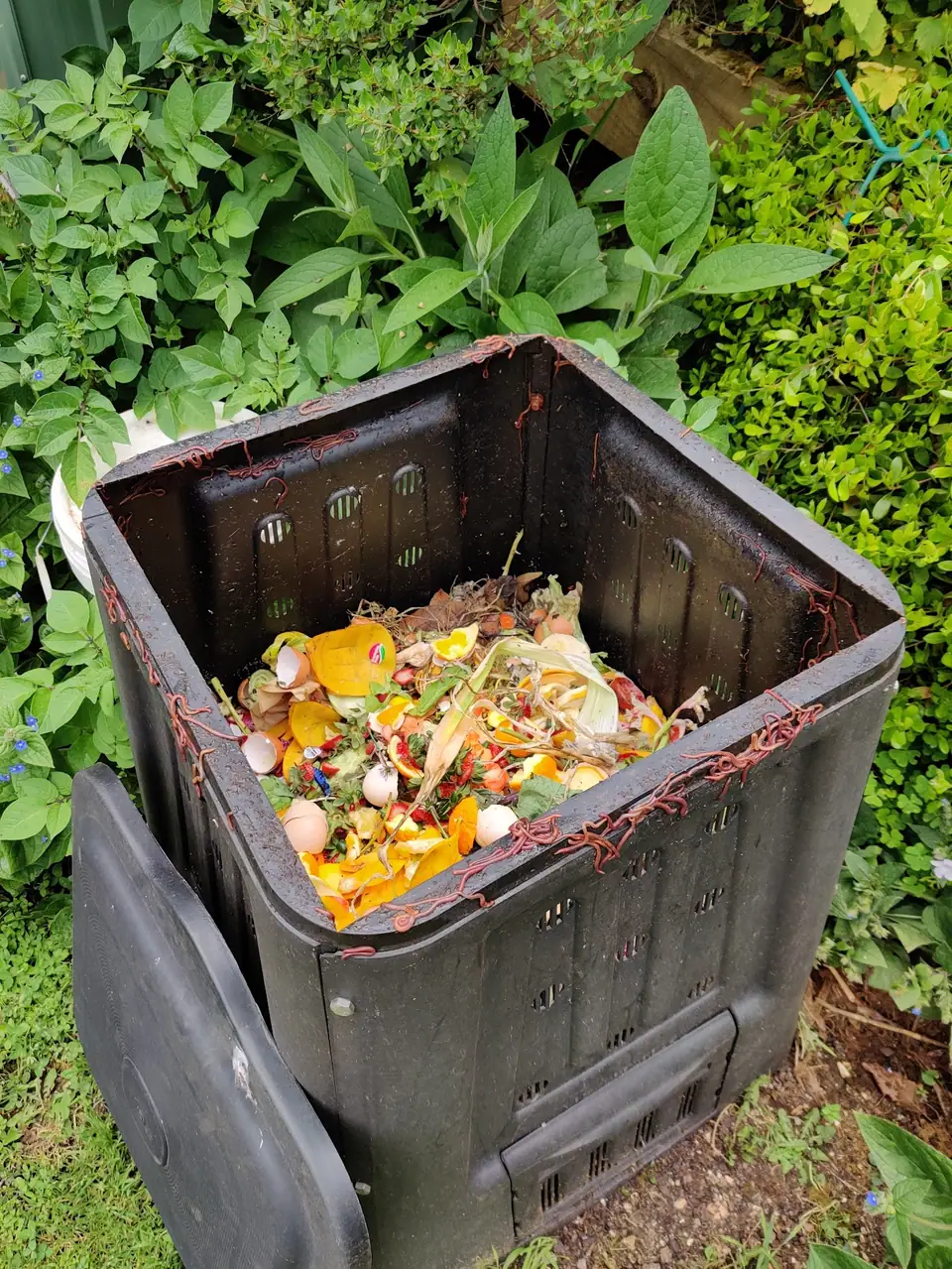
If you do grow, think about where the scraps go. A small worm bin or bokashi bucket turns kitchen waste into something for your pots.
Balcony growing guides
Frequently asked questions
Can you grow a garden on a balcony?
Yes. Oregon State University Extension says that even if all you have is a balcony, you can still grow vegetables in containers. What you can grow depends mostly on how many hours of direct sun the balcony gets.
What are the best plants to grow in a balcony garden?
Match plants to your sun. With six or more hours of direct sun, tomatoes, peppers and beans do well. With four to six, Iowa State Extension lists lettuce, spinach, kale, chard, peas and herbs such as basil, parsley and chives.
What can I grow on a shady balcony?
With two to four hours of direct sun, Iowa State Extension lists bok choi, mustard greens, spinach and mint. It also says no vegetable, fruit or herb will be productive in full shade, so a balcony with under two hours suits shade-tolerant ornamentals or artificial plants.
What grows on a windy balcony?
The Royal Horticultural Society suggests plants that tolerate drought and wind, often those with narrow, gray or waxy leaves. Low, wide pots and a slatted or mesh screen that filters the wind help any plant.
Why does my hardiness zone matter for balcony plants?
It tells you how cold winters get. The USDA map is based on the average annual extreme minimum winter temperature. It matters for plants you want to keep from year to year, such as rosemary, which Illinois Extension says is not reliably hardy in zone 6 or colder.
Sources
- Growing Edible Plants in Shady AreasIowa State University Extension and Outreach
- Which vegetables will grow in partial shade?Iowa State University Extension and Outreach
- No yard? Grow vegetables in containersOregon State University Extension Service
- Growing Herbs in ContainersIowa State University Extension and Outreach
- Blossom End Rot in Container Grown TomatoesNew Mexico State University Extension
- UTK Question of the Week: What causes blossom drop in tomatoes?University of Tennessee Extension (Tennessee Local Food)
- Greening balconies and roof gardensRoyal Horticultural Society
- Container SizeIllinois Extension
- USDA Plant Hardiness Zone MapUS Department of Agriculture, Agricultural Research Service
- RosemaryIllinois Extension